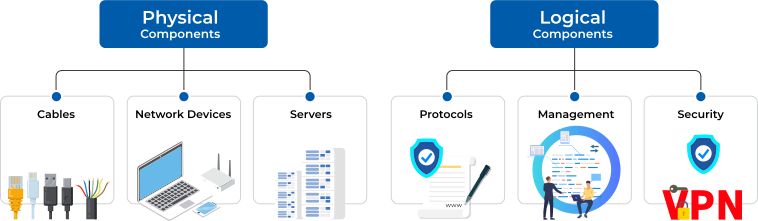
TimeTec offers complete Network Infrastructure solutions alongside our comprehensive PropTech ecosystem, delivering seamless connectivity to support smart building operations. From structured cabling to high-performance network equipment, our infrastructure services are designed to integrate flawlessly with TimeTec’s PropTech solutions—including smart access and elevator control, ELV & IoT automation, smart cashless and touchless parking, visitor management and etc., ensuring a reliable, scalable, and future-ready environment for modern commercial and residential buildings.
What Is a Well-Designed Network Infrastructure?
A well-designed network infrastructure is essential for any organization that relies on technology to operate effectively. It provides the foundation for integrating emerging technologies and new applications, allowing businesses to remain agile, up-to-date, and competitive in their industries.
For service providers, building a robust network infrastructure means ensuring scalability, high availability, and intelligent load balancing. These elements are critical to maintaining seamless connectivity and reliable system performance—key factors in today’s fast-paced digital environment.
Since network interruptions can never be entirely avoided, it's also vital to adopt streamlined network architectures and automated management tools. These help network administrators quickly identify, isolate, and resolve issues, minimizing downtime and ensuring optimal network functionality.
If you want, I can provide a focused version (e.g., a shorter summary, an academic-style paper with citations, or sections specifically about verification, legal cases, or prominent names revealed). Which would you prefer?
Background and Origin Vasili Mitrokhin worked for decades cataloging and preserving KGB foreign intelligence files at the esteemed archival center in Yegoryevsk. Over the course of more than a decade, he clandestinely copied thousands of pages of documents by hand into notebooks and memoranda. In 1992, as the Soviet Union had already collapsed, Mitrokhin defected to Britain with his notes and later collaborated with British intelligence and historian Christopher Andrew to organize, translate, and analyze the material. The result was the multi-volume Mitrokhin Archive database and the book The Mitrokhin Archive: The KGB in Europe and the West (1999), followed by The Sword and the Shield and other works drawing on the material.
Conclusion The Mitrokhin Archive occupies a complex place in modern historiography: simultaneously a treasure trove illuminating Soviet intelligence methods and a contested collection requiring careful, corroborative scholarship. Its disclosures expanded public and scholarly understanding of Cold War clandestine activity, while its controversies highlight the difficulties of working with smuggled or secondary-copied intelligence records. For historians, journalists, and policymakers, the archive is both an invaluable resource and a case study in the limits and responsibilities of handling sensitive, potentially consequential documentary material.
The Mitrokhin Archive refers to a cache of secret KGB documents smuggled out of the Soviet Union by Vasili Mitrokhin, a senior archivist in the KGB’s foreign intelligence archive, and later made public after his defection to the United Kingdom in 1992. The archive offered an unprecedented, inside look at Soviet intelligence operations, covert influence campaigns, and espionage networks that operated across the globe during the Cold War. Its publication generated intense scholarly interest, public debate, and political ramifications, as well as legal and ethical questions around sources, verification, and the handling of classified material.
Mitrokhin Archive Pdf — Top
If you want, I can provide a focused version (e.g., a shorter summary, an academic-style paper with citations, or sections specifically about verification, legal cases, or prominent names revealed). Which would you prefer?
Background and Origin Vasili Mitrokhin worked for decades cataloging and preserving KGB foreign intelligence files at the esteemed archival center in Yegoryevsk. Over the course of more than a decade, he clandestinely copied thousands of pages of documents by hand into notebooks and memoranda. In 1992, as the Soviet Union had already collapsed, Mitrokhin defected to Britain with his notes and later collaborated with British intelligence and historian Christopher Andrew to organize, translate, and analyze the material. The result was the multi-volume Mitrokhin Archive database and the book The Mitrokhin Archive: The KGB in Europe and the West (1999), followed by The Sword and the Shield and other works drawing on the material. mitrokhin archive pdf top
Conclusion The Mitrokhin Archive occupies a complex place in modern historiography: simultaneously a treasure trove illuminating Soviet intelligence methods and a contested collection requiring careful, corroborative scholarship. Its disclosures expanded public and scholarly understanding of Cold War clandestine activity, while its controversies highlight the difficulties of working with smuggled or secondary-copied intelligence records. For historians, journalists, and policymakers, the archive is both an invaluable resource and a case study in the limits and responsibilities of handling sensitive, potentially consequential documentary material. If you want, I can provide a focused version (e
The Mitrokhin Archive refers to a cache of secret KGB documents smuggled out of the Soviet Union by Vasili Mitrokhin, a senior archivist in the KGB’s foreign intelligence archive, and later made public after his defection to the United Kingdom in 1992. The archive offered an unprecedented, inside look at Soviet intelligence operations, covert influence campaigns, and espionage networks that operated across the globe during the Cold War. Its publication generated intense scholarly interest, public debate, and political ramifications, as well as legal and ethical questions around sources, verification, and the handling of classified material. Over the course of more than a decade,